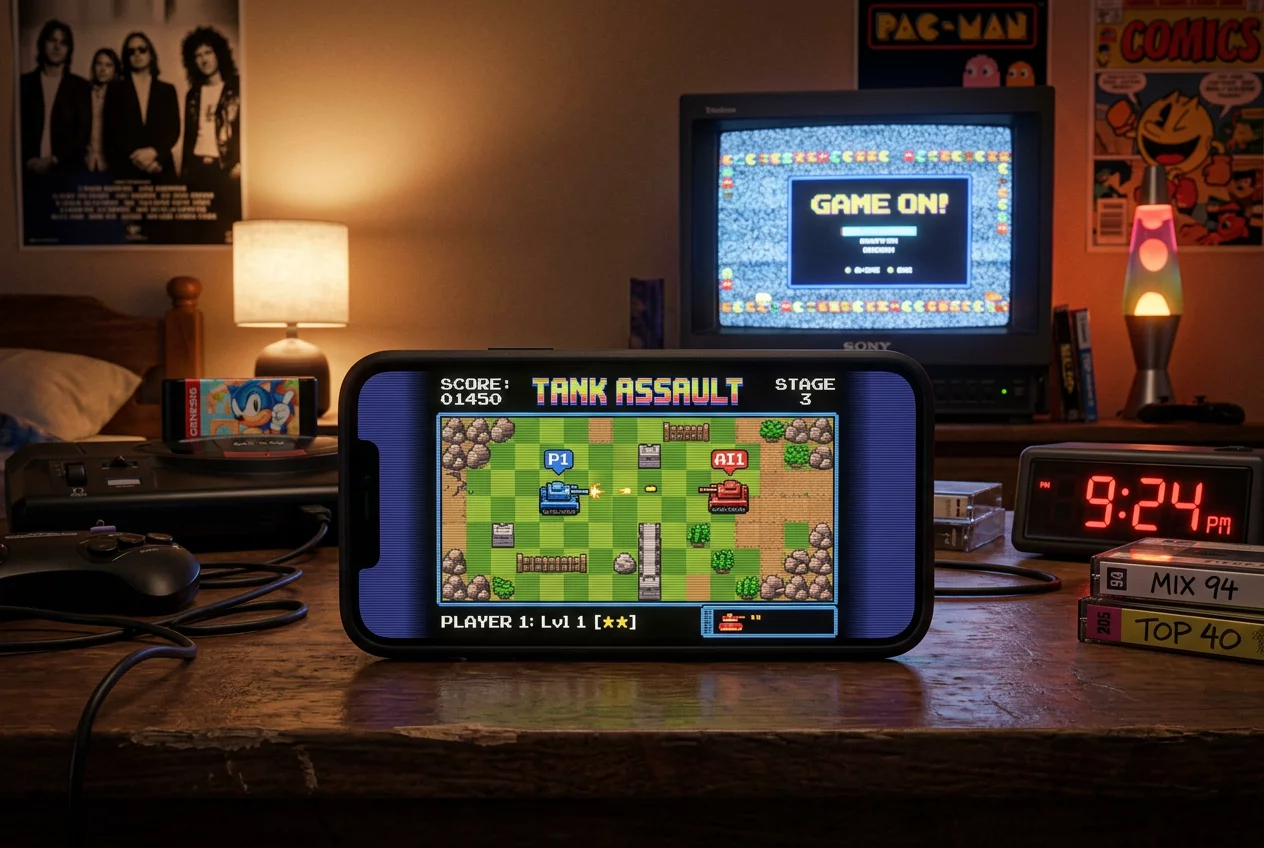
When we talk about the console wars of the 90s, the crown was often claimed through raw silicon power. The shift from 8-bit to 16-bit architecture wasn't just a number change; it was a revolution in how gaming worlds were built. Dendy, as the quintessential Famiclone, relied on the Ricoh 2A03 processor. It was an 8-bit beast that kept millions glued to their screens, despite its limitations in arithmetic operations. Its charm came from its efficiency and the specific chiptune sound it produced through its custom PSG chip.
The 16-bit Giant: Motorola 68000
On the other side, the Sega Mega Drive brought the Motorola 68000 into our living rooms. This was a legendary chip used in expensive arcade machines and professional workstations. With a 16-bit data bus and a 32-bit internal architecture, it processed data at speeds that made the Dendy feel like a toy. This extra horsepower allowed for complex animations, larger sprites, and the famous "Blast Processing" marketing campaigns. Memory management was also a huge leap, as the Sega could address much more RAM, reducing the need for constant cartridge swapping or complex bank switching.
The difference in VRAM (Video RAM) was perhaps the most visible aspect of this hardware battle. While Dendy struggled with sprite flickering when too many objects crossed the same horizontal line, Sega handled dense crowds of characters with ease. This technological gap defined the games we loved: from the simple, precision-platforming of 8-bit classics to the cinematic, fast-paced action of the 16-bit era. Both systems shared an online legacy that continues to thrive in modern emulators today.
Frequently Asked Questions
- Was Sega really faster than Dendy? Yes, the 16-bit processor operated at roughly 7.6 MHz, while the Dendy's CPU hovered around 1.7 MHz. It processed nearly four times as much data per clock cycle.
- Does more bits always mean better games? Not necessarily. While hardware limits dictated graphics, the game design on 8-bit systems often pushed developers to be more creative with their limitations.
Retro Discussions
PixelFan
Great comparison of the processors! I never realized the Motorola chip was such a standard in professional equipment back then.
Leave a Comment